EXT.For filmmakers
From the screenplay to the call sheet.One project for the whole crew.
Short films, music videos and commercials. Import the screenplay, board it, break it into shots, plan the shooting days and send the client one link. Open source, and free on your own server.
SC 01Workflow
Pre-production in the words of the set. Each step feeds the next.
Storyboard, shot list and schedule are the same data, seen three ways. Change a lens in one and it changes everywhere.
Start from the screenplay.
Import a Fountain, Final Draft or PDF screenplay. Every scene becomes a scene of the storyboard, with one frame per scene or one per action paragraph.
- Read in your browser: the file is never uploaded
- The characters who speak go into each frame's cast
- A new draft? Import it again: scenes update, frames stay
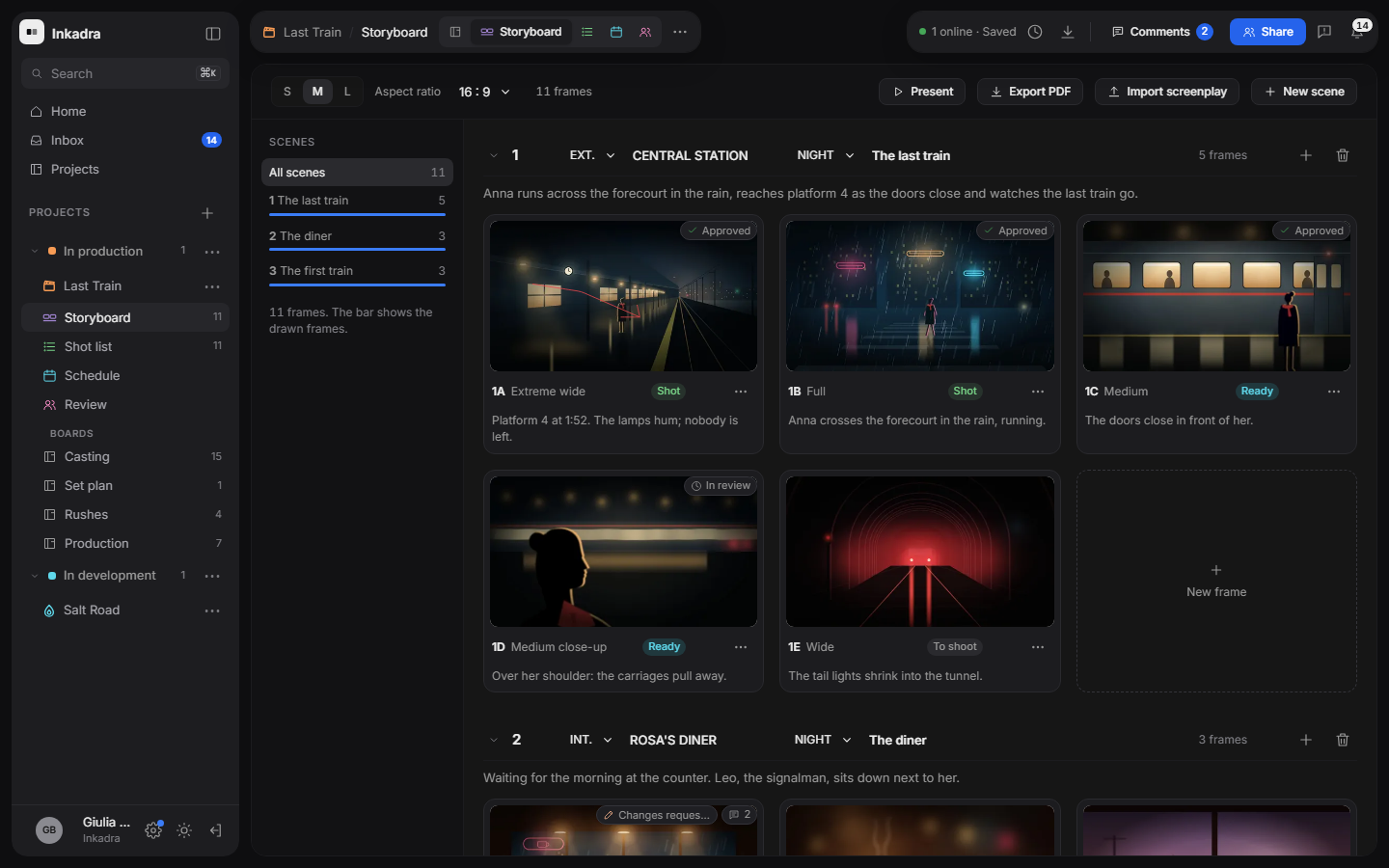
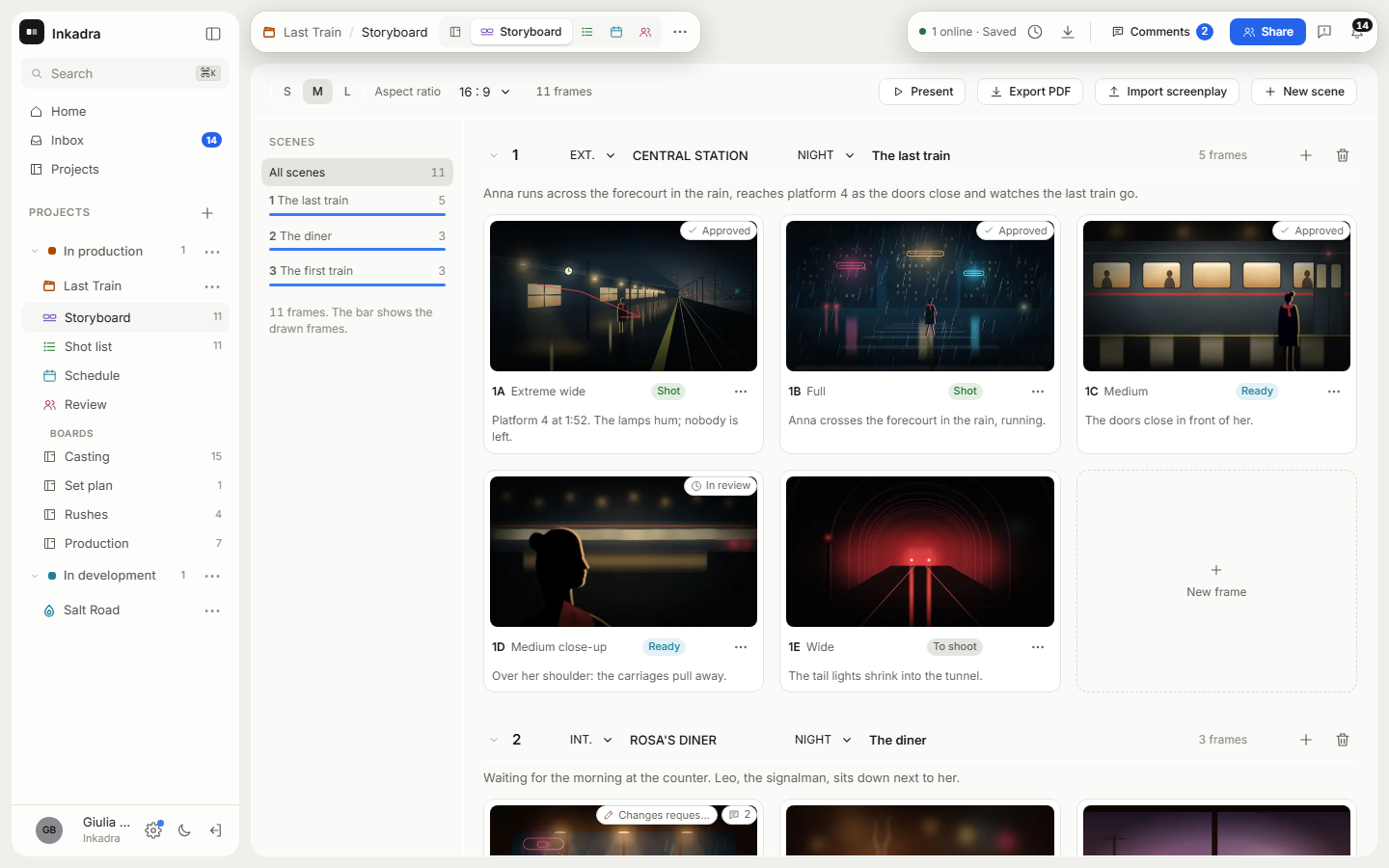
Board every shot.
Scenes and frames with shot size, angle, movement, lens, duration, cast and status. Draw on a frame, drop a picture in, or take a still from a video.
- Draw over a frame full screen: arrows, shapes, text
- Present it full screen, or export a PDF for the set
- Your instance's own lists of shot sizes, angles and moves
- References from the web reach your boards with the browser clipper
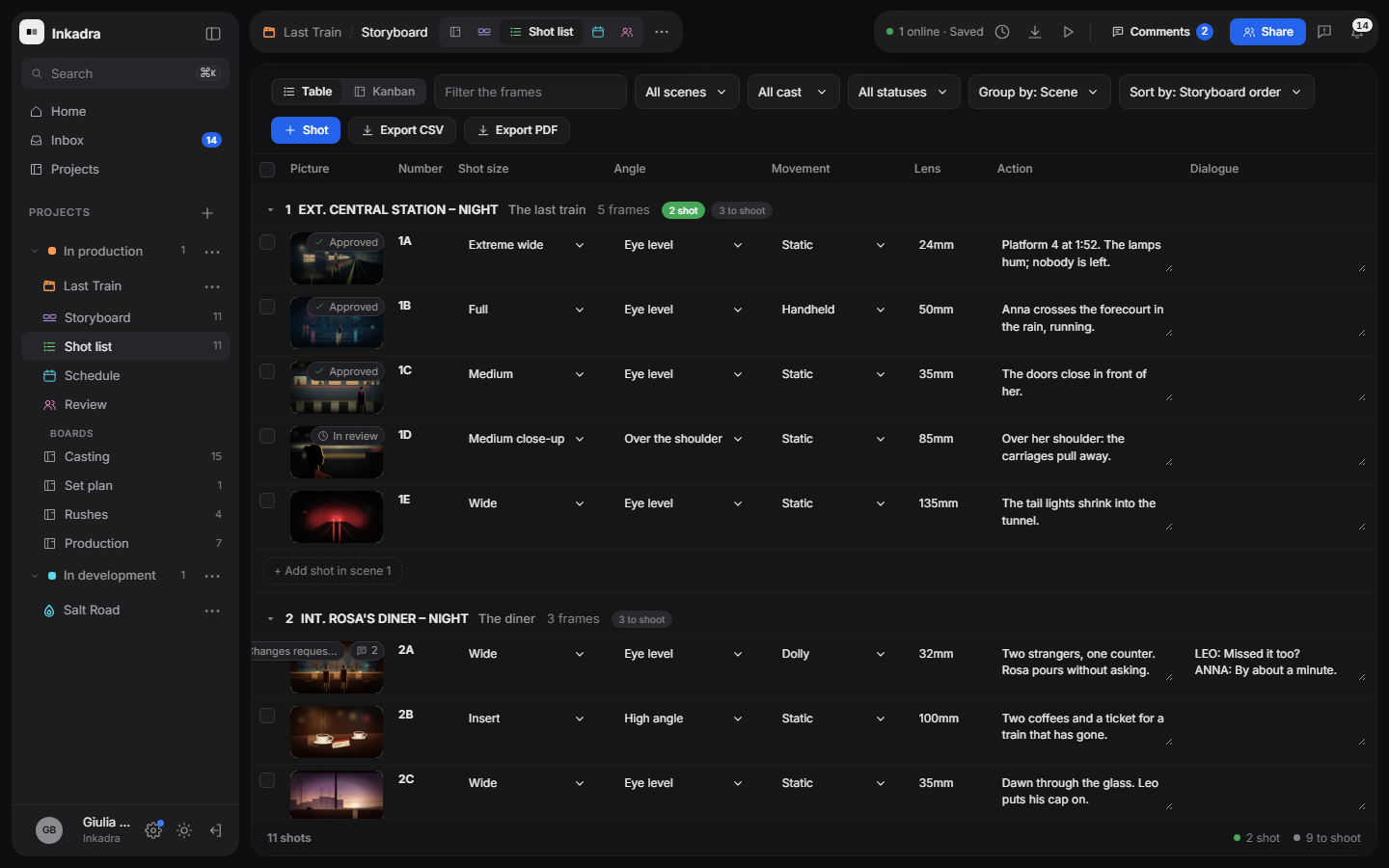
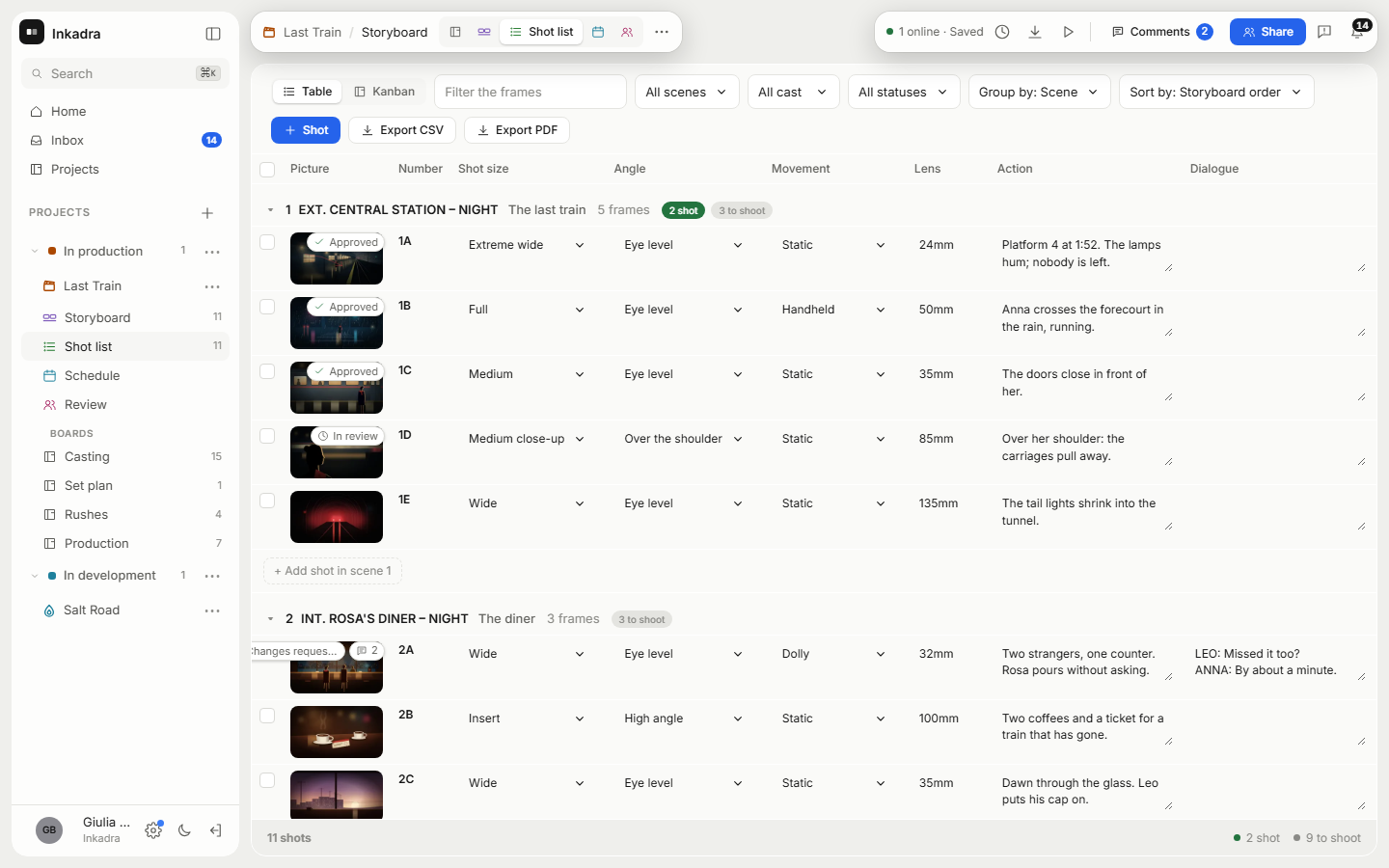
The shot list writes itself.
It is the storyboard's own data, as a table. Filter by scene, cast or status, group and sort, then export a CSV or a PDF for the assistant director.
- Table or kanban, grouped by scene
- Estimated running time, always up to date
Shooting days and call sheets.
Drag shots into shooting days and add prep, breaks and moves around them. Each day prints as a call sheet.
- Call time, planned wrap, location and notes for each day
- The cast's first call, worked out from the schedule
- Home opens on today's shooting day
Last Train · Call sheet
Day 1 of 3 · Mon 9 NovCall time
| Time | Shot | Description |
|---|---|---|
| 18:30 | – | Lamps, haze and rain machine |
| 20:00 | 1B | Anna crosses the forecourt in the rain |
| 21:30 | – | Dinner |
| 22:15 | – | Company moves to platform 4 |
| 00:30 | 1A | The empty platform |
| 01:15 | 1C | The doors close |
Notes
The last train leaves at 0:42; platform 4 is ours from 0:30. Crew parking in Via dei Binari.
Set plans, characters and locations.
Draw the location to scale with cameras and their field of view, actors, lights and movement paths. Character and location cards keep references, costume and the scenes they appear in.
- A camera has a lens and an angle, and shows what it sees
- Scenes worked out from the frames whose cast names the character
- Guests can open a plan to look and zoom, never to edit

Approved, frame by frame.
The client opens a link, approves frames or asks for changes, and every decision is recorded with who made it and when.
- No account for the client: a name is enough
- Keep the production boards for the team only
- Comments that say who will read them: team or guests
Last Train · Storyboard
Review- Giulia approved 1A and 1BApproved
- Elena approved 1CApproved
- Elena asked for changes on 2A
We would like to see Rosa’s face when she pours.
Changes requested
SC 02Sample project
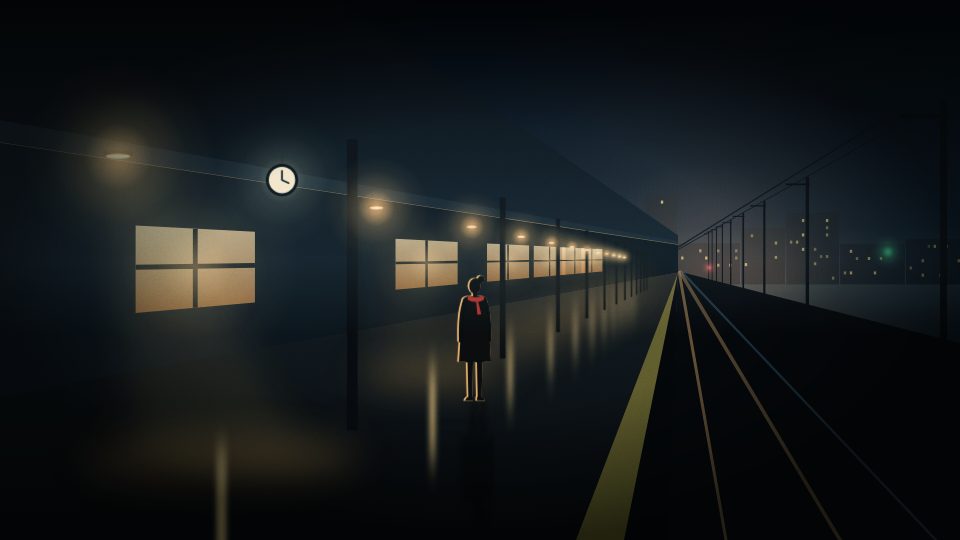
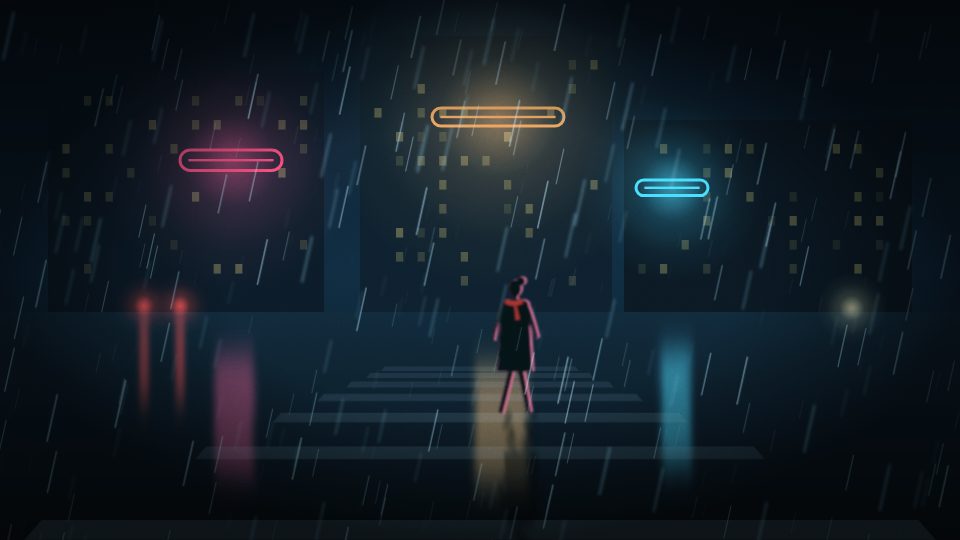
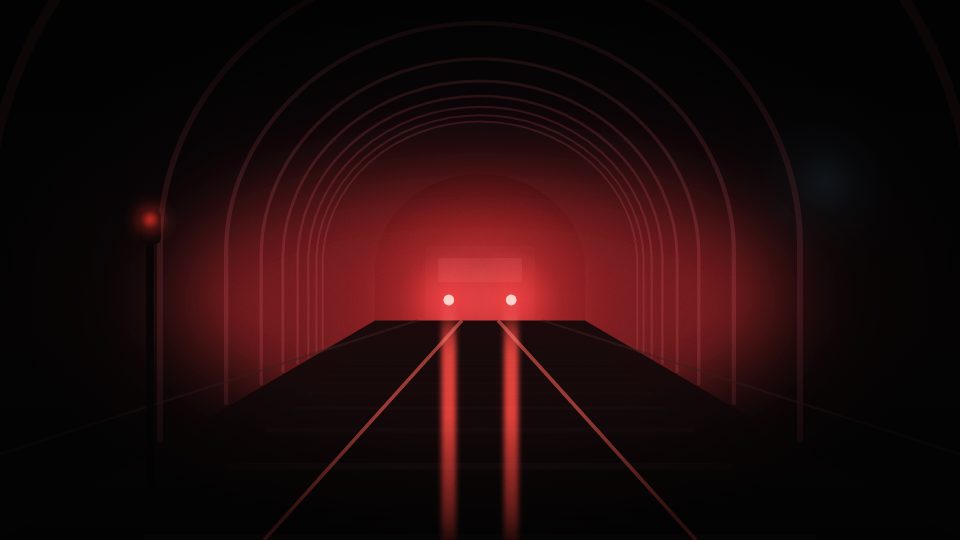
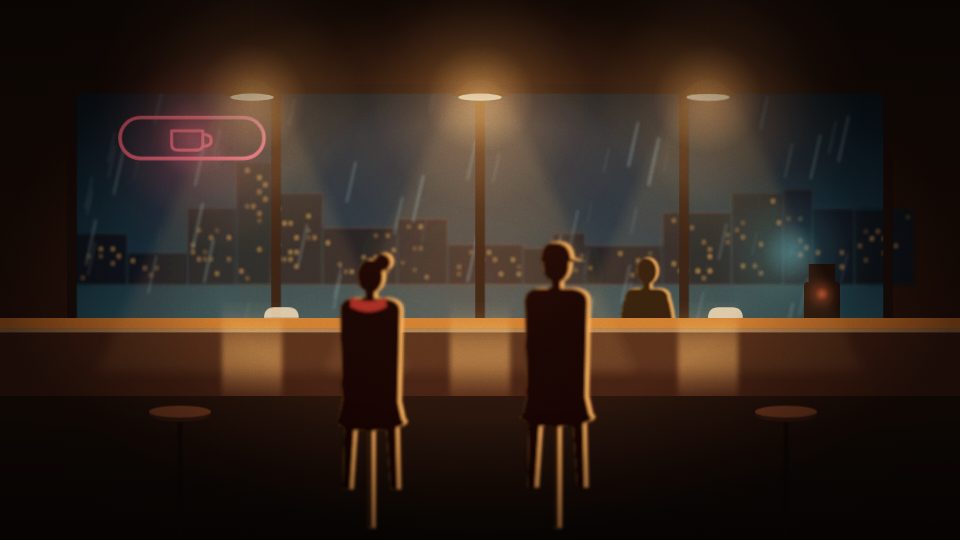

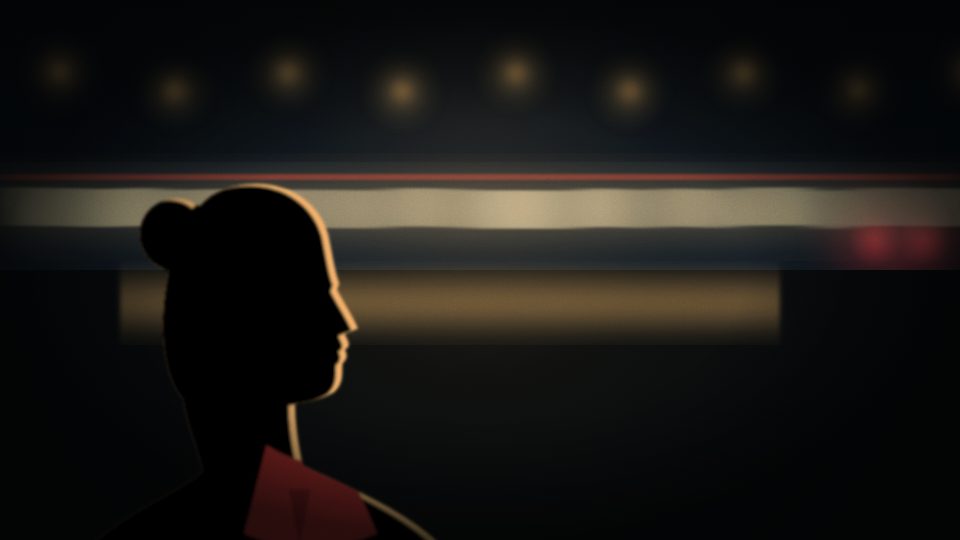
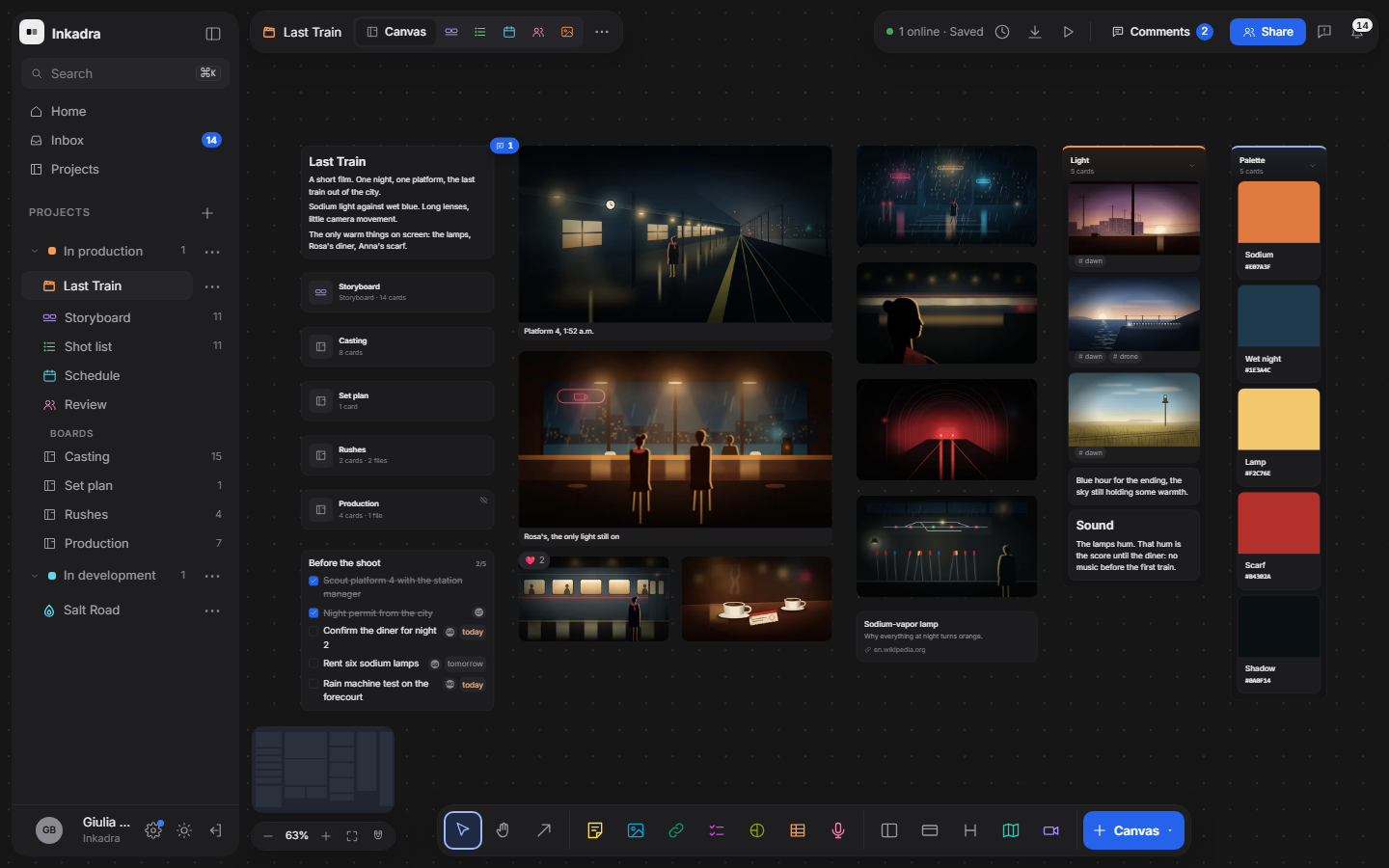
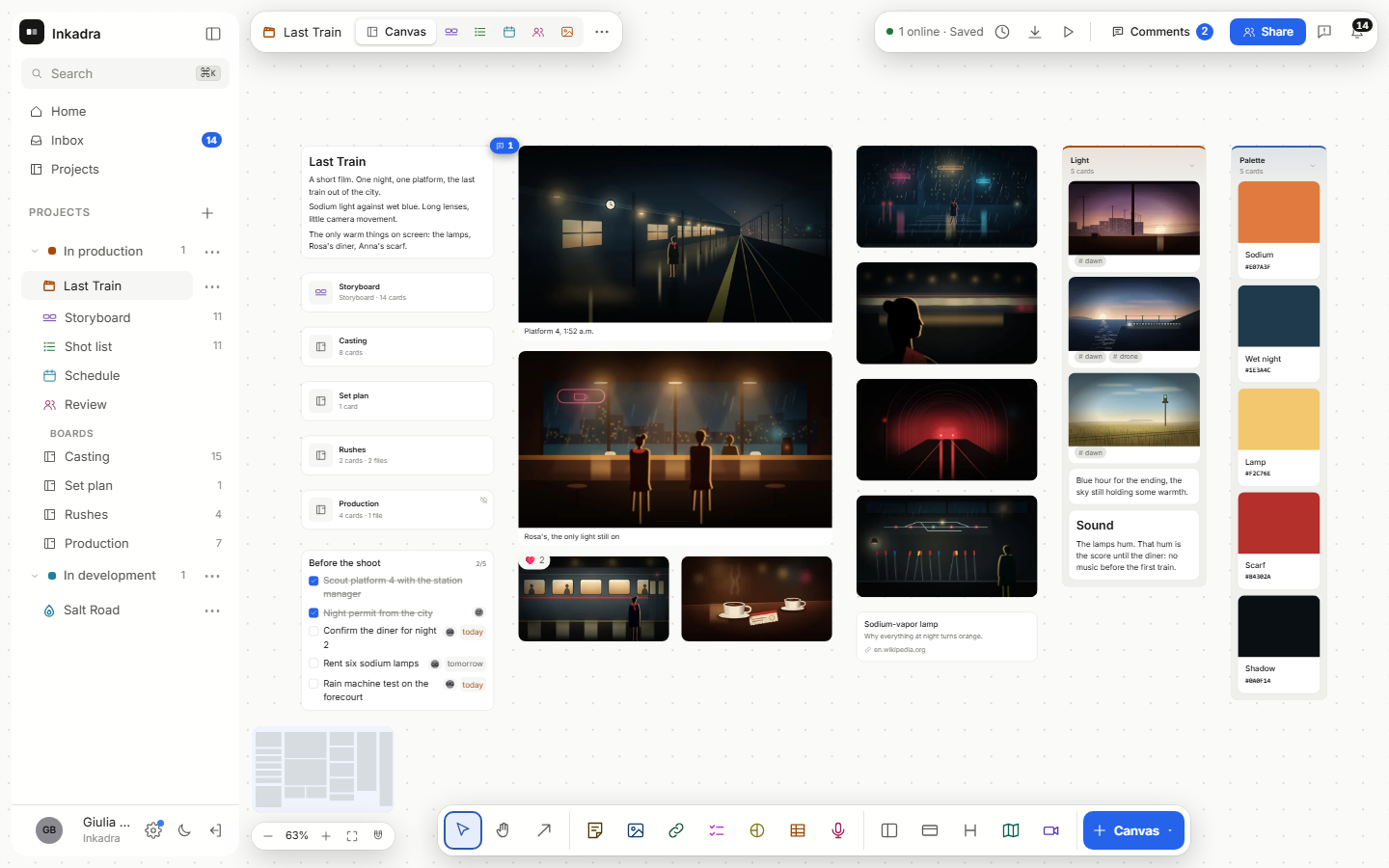
Last Train, the demo project.
A short film. One night, one platform, the last train out of the city.
Open it in the demo and take it apart: the moodboard, the storyboard, the shot list, three shooting days and a client review are all there.
- Scenes
- 3
- Shots
- 11
- Shooting days
- 3
- Characters
- Anna, Leo, Rosa